
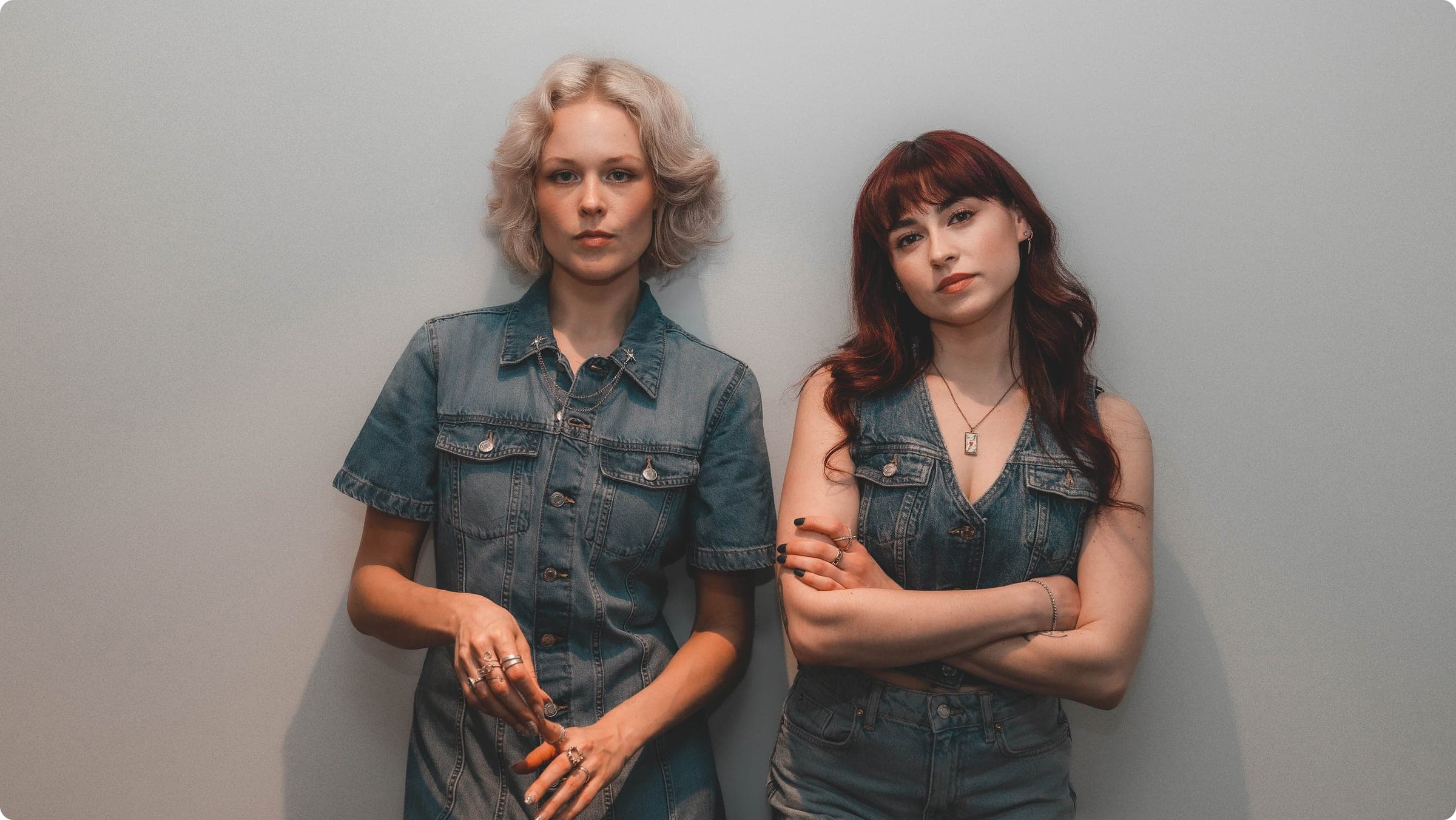
Meet Good Grief, the Toronto-based songwriting and production duo founded by Bryn McCutcheon and Kirstyn Johnson, whose chemistry and genre-spanning versatility have positioned them among Canada’s most sought-after writers.
Their collaborative circle includes standout artists such as Delaney Jane, Dragonette, Fefe Dobson, Nelly Furtado, Rêve, Shawn Desman, Sofia Camara, T-Minus, and more.
As they continue expanding their creative ecosystem, we wanted to learn more about the story behind their partnership and the momentum they’ve built.
From studio sessions to artist retreats to showcases, everything they create points back to one central belief: “Authenticity isn’t just a feeling — it’s a strategy for longevity.”
We recently sat down with Bryn and Kirstyn to explore how their partnership developed, the magic that fuels their creative process, and the community they’re building through Good Grief. From writing rooms to retreats, showcases, and everything in between, they opened up about the evolution of their craft and the vision driving their work.
1. How did the two of you first meet, and when did you realize the chemistry was something special?
We met in 2019 at a writing camp for emerging pop artists curated by DreamHouse Studios (Toronto). At the time, we both entered the camp as solo artists and aspiring singer-songwriters who enjoyed the art of collaboration.
We started the day as strangers in a room together, writing for someone else, and quickly realized that our chemistry was undeniable.
From the beginning, our compatible differences have been our key to success; we fill in the blanks for each other and know when to let each other shine. On that first day, we knew there was a rare dynamic between us — and we’re still invested in exploring it six years later.
2. What’s the story behind the name Good Grief
We didn't actually name our duo until 2022. We were just two artists showing up to sessions together instead of solo, but people liked the energy and versatility we brought, so we ran with it. But everyone — I mean EVERYONE — was referring to us as “the girls,” both in person and online.
As our story would have it, we were at another writing camp hosted at Kilometre House (Toronto) when Rodney Murphy (President of KMG) popped into our session and said, “So what are we supposed to call you guys? Are you a band? You need a name.”
That same night, we went home, drank a few bottles of wine, heavily considered calling ourselves “the boys,” and eventually landed on Good Grief. The name spoke to our contrast as creatives, and it seemed fitting for a couple of moody-writer-girls making pop hits out of the hardest stories our artists had to offer.
For the record, we had no idea it was a Charlie Brown reference.
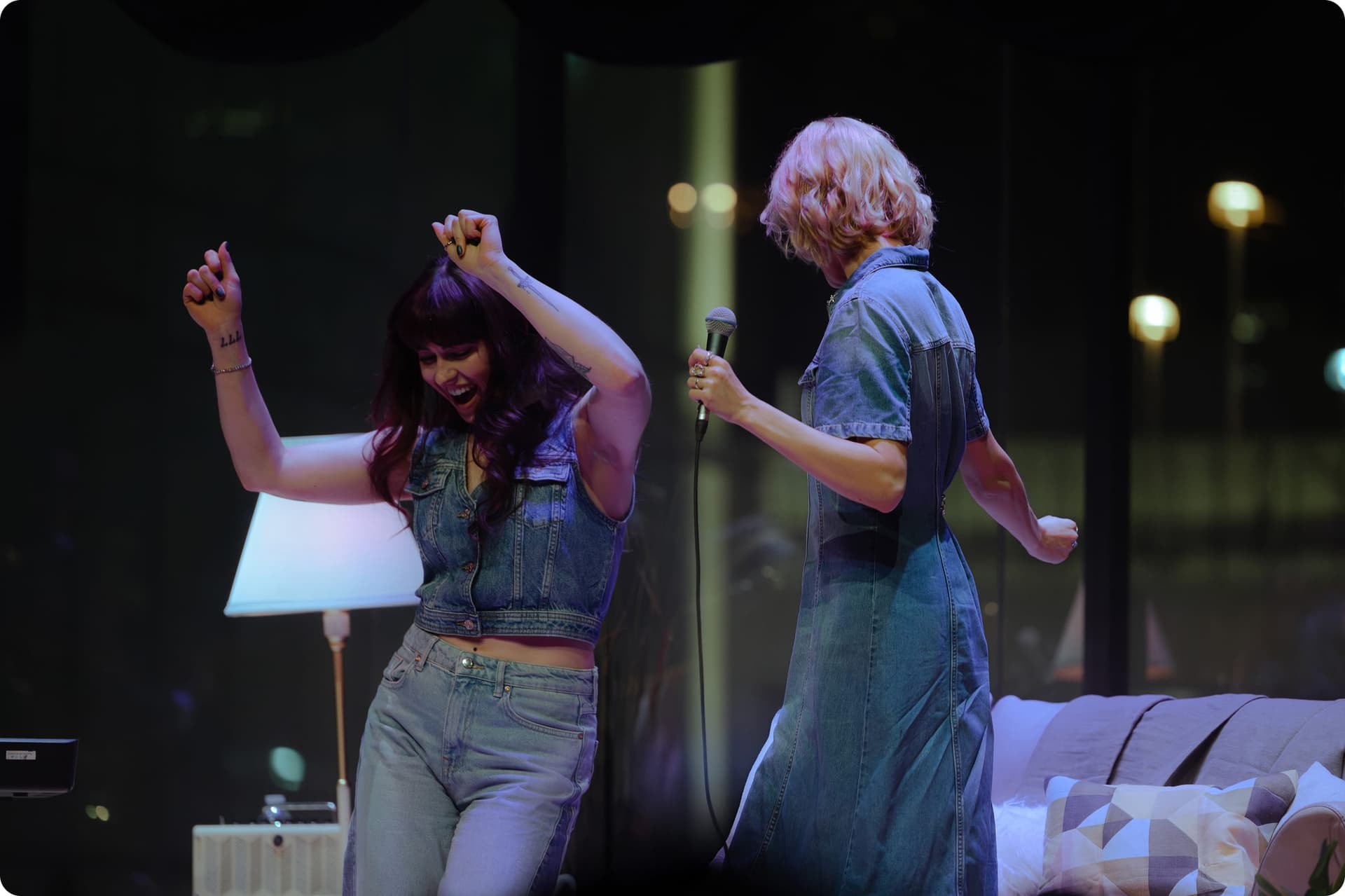
Photo Credit: Good Grief by Magaly Captura
3. How do you typically approach a writing session together — do you each fall into certain roles, or does it shift depending on the day or the artist?
Part of the beauty of doing this together is that we have the privilege of switching roles in any room, depending on what the session needs that day.
Sometimes we enter a room and our job is to write lyrics and melodies, crafting the story with the artist present. Other times, we’re hosting the session as producers — Bryn runs the desk and engineers the writing session while Kirstyn is at the piano or guitar, working on the arrangement (on top of the traditional songwriting, too).
It all depends on what the specific room needs; some days you wear multiple hats, and some days you specialize. The goal is always the same: to create the dynamic that brings the most magic out of the group present.
“The best rooms are the ones where trust and curiosity lead the way — that’s when the real magic happens.”
4. You’ve worked with so many incredible artists and producers. What do you think makes a collaboration truly click?
You’re not going to have chemistry with everyone you work with, no matter how much you love their art. And that’s not a failure; it gets us closer to knowing how our magic is best served. There’s no guaranteed way to make a hit — but when you leave a room excited to show up the next day, you’re usually on the right track.
When a collaboration really clicks, it’s usually because everyone in the room has checked their ego at the door. It doesn’t matter how many awards you’ve won or if it’s your very first session — you’re there because you have something valuable to contribute.
The best rooms are the ones where you actually take the time to know the people you’re creating with, and where trust and mutual respect become the foundation for the music. Everyone we work with is brilliant — but the most powerful songs tend to emerge when we all feel secure enough to let our skill take a back seat to inspiration.
You can’t force inspiration; we need to make room for it to strike, and be ready to support it with our skill when the time is right.
5. Your bio mentions creating space for artists to access their “defining truths.” How do you build that kind of trust in a session?
We try our best to really get to know the people we’re spending time with. Co-writing is a lot like speed dating, but ultimately, we’re dating to marry. We take the time to talk, find out where our stories overlap, and get to know each other as friends before focusing on making a song out of it.
Sometimes this part of the writing process looks a bit like a therapy session — or maybe even a courtroom interrogation (in the friendliest way possible). We take turns making notes on the conversation happening in the room: when one of us starts talking to the artist, the other writes down everything that’s said. We’re capturing their story, but we’re also listening deeply to how they speak — the words they naturally reach for, the rhythm of their language — so that the lyrics truly reflect their voice.
With the state of the industry and technology, making music is easier than ever. It’s barely even a unique talent to simply complete a song. However, we’ve always pushed our artists to “write the song only you can sing.” Tell your audience something about yourself that both intrigues them and exposes you at the same time. Give the listener a space they can only access through you.
To us, that kind of raw realness puts an intangible stamp on someone’s career.
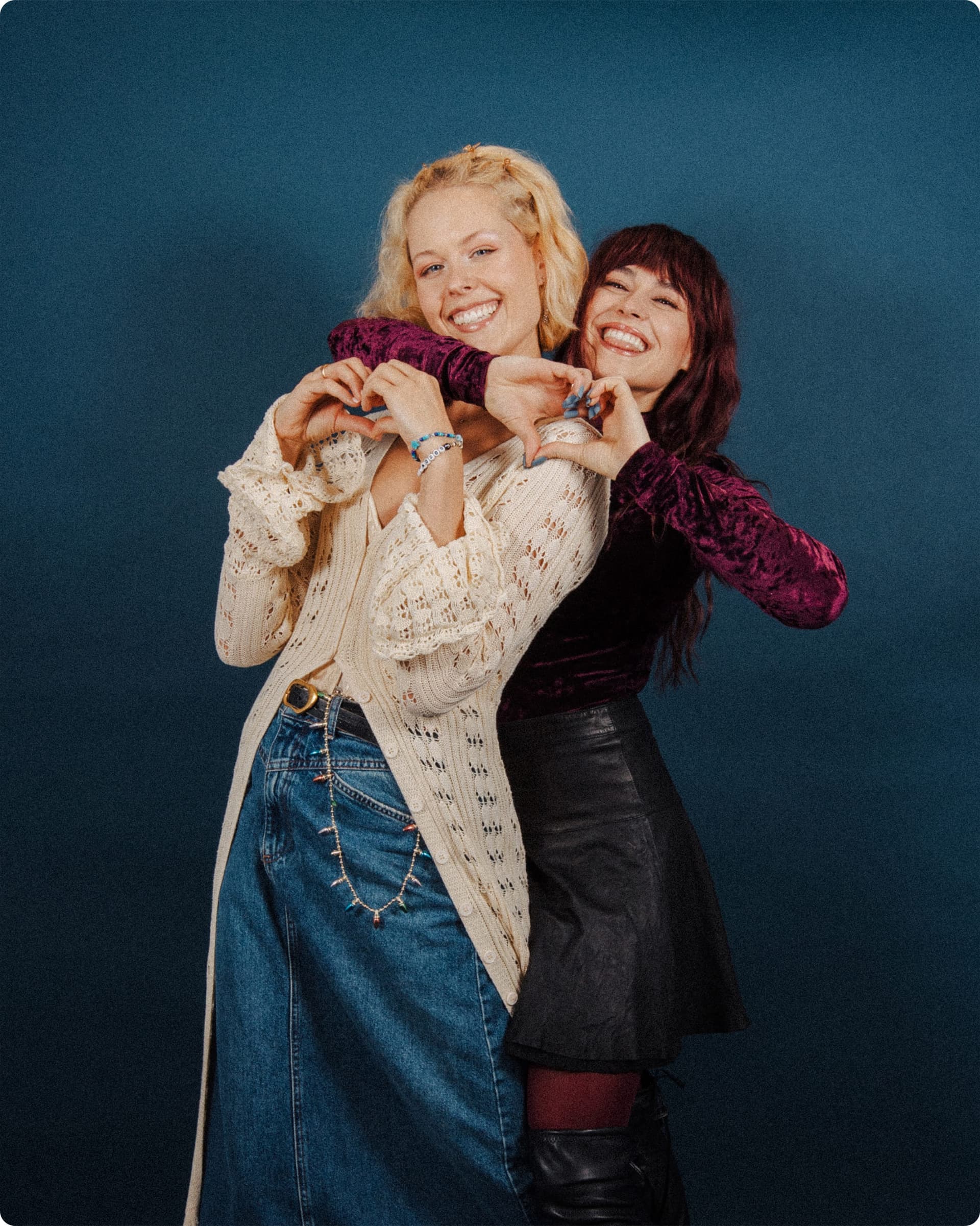
Photo Credit: Good Grief by Magaly Captura
6. You recently started hosting Good Grief Retreats, which combine songwriting and wellness. What inspired the idea, and how do those retreats differ from a typical writing camp?
Good Grief Retreats actually came into our lives in a very unexpected way. The initial idea was brought to us by our close friend, long-time collaborator, and retreat co-founder, Tim Abraham, when he was approached by Pine Island asking if Good Grief would be interested in hosting a song camp on their island studio. Hilariously, we had absolutely no experience doing anything like that before. So, in classic Good Grief fashion, we said yes and figured out the rest later.
As fate would have it, earlier that year we had been introduced to Tuan Chau, a registered massage therapist, and had been brainstorming about bringing health practices into musical spaces. Tuan was immediately on board to build a holistic health and wellness song camp with us. He connected us with Dr. Eloise Ballou, who has since become our on-site psychiatrist at the camp.
It turns out we all shared a deep interest in the intersection of physical wellness, emotional health, and creative flow. This retreat serendipitously became the perfect container to offer artists something more than your typical song camp experience.
Good Grief Retreat is facilitated by a multidisciplinary team of musicians and wellness professionals, bringing together some of Canada’s top emerging talent and offering a rare pause designed for reflection and creative expansion. Our 2025 roster included viral sensations such as Raymond Salgado, Nicolina Bozzo, and Heather Russell, among other incredible artists in the Good Grief community.
In addition to our on-site crew, we’ve been able to provide artists access to highly acclaimed professionals such as Marla Joy (vocal and performance coach), Rhiannon Rosalind (founder of Conscious Economics and Lunar Studios), and Forest Blakk (multi-platinum artist/songwriter/producer and mentor). We carefully structured each day with the intention of removing friction and supporting creative flow. Mornings begin with breakfast, a voluntary cold plunge, and a gentle movement and mindfulness practice hosted by Kyra Tudlong, followed by a workshop led by one of the guests before sending the creatives into their studios for the day.
Good Grief Retreats are about honoring the whole person — not just the output. In our experience, when you remind artists to prioritize the sanctity of their body, mind, and craft, the results are irreplicable.
7. What do you hope artists and songwriters take away from those experiences?
From the retreats to our sessions, our goal is always to help artists get back in touch with the reason they started creating in the first place.
Authenticity isn’t just a feeling — it’s a strategy for longevity. At the heart of it, we’re building what we wish we had when we were just starting out: spaces that feel safe enough to be honest, where your voice is heard, and your story matters. We want to give artists permission to shift from quantity to quality, from copying trends to honoring the thing only they can make.
Thousands of songs are uploaded every day. Millions of artists are fighting to be heard. What we hope our collaborators take away from our spaces is a sense of confidence that who they really are is what will actually cut through the noise.
“Authenticity isn’t just good for the art — it’s the key to longevity in an industry that’s always changing.”
8. How do you keep your creative energy fresh when you’re writing so often and with so many different artists?
We are honestly really grateful to show up and do what we love every day. It makes it easy to keep the creative energy fresh when you accept that you can’t apply the same formula to every collaboration, and that every day feels different from the last.
Like anyone working overtime, eventually we do hit burnout. This is a pattern we are trying to learn how to overcome. There is something very powerful to be said about having to live life in order to write about it. We’ve stopped viewing our time away from the studio as a break, and instead have reframed it as fuel for the next fire.
On top of that, we’re both artists with our own solo projects. Sometimes it’s necessary for us to reconnect with our own voices. Giving ourselves the opportunity to explore our own art reminds us what each of us uniquely brings to Good Grief, and allows us to approach our partnership with a deeper sense of our individual magic.
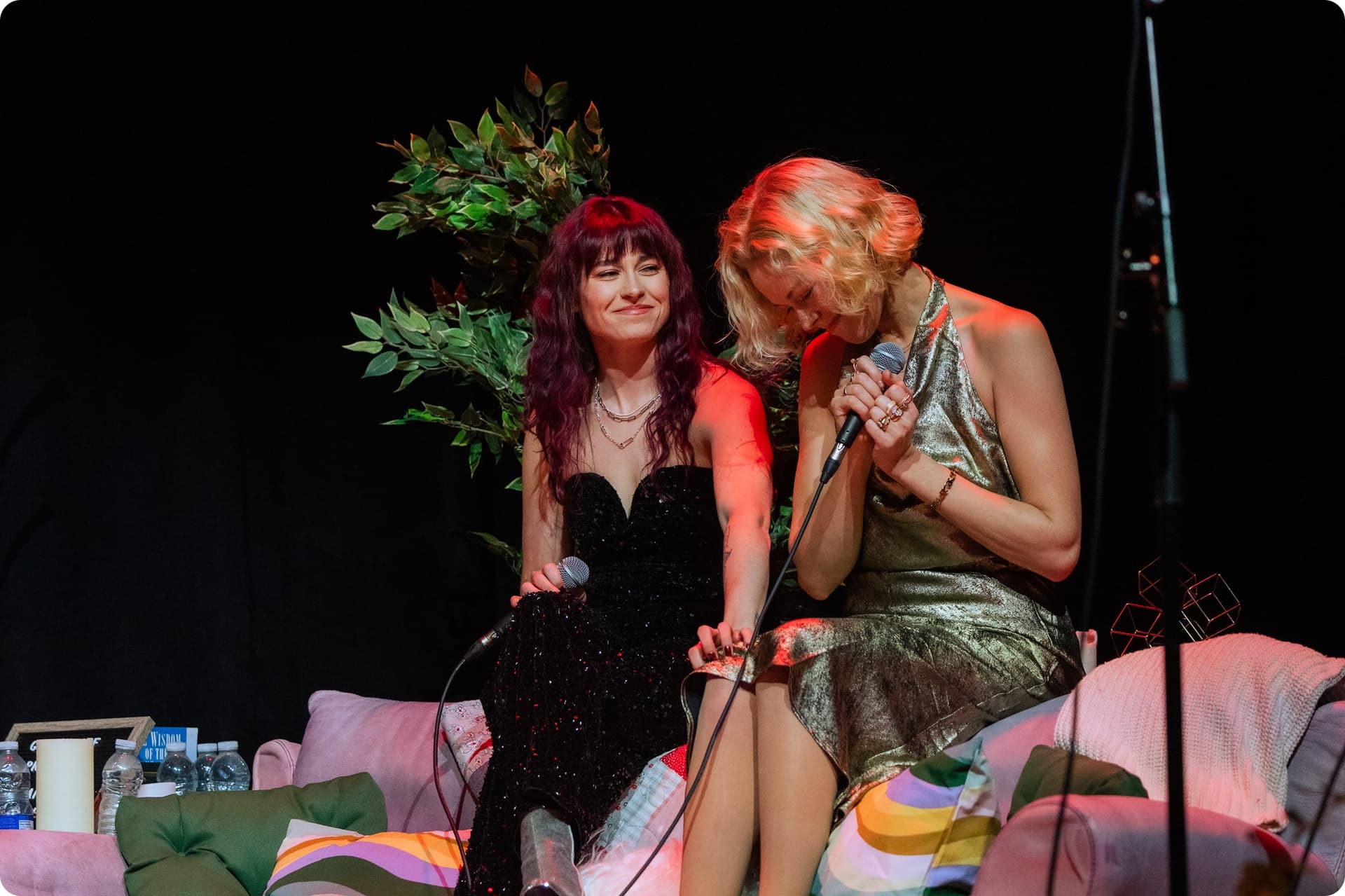
Photo Credit: Good Grief by Magaly Captura
9. What has been one of the most memorable or career-shaping sessions for you so far?
We host a songwriters’ showcase called Good Grief Presents: The Inner Circle, where we invite artists on stage with us to talk about the creation process and give the audience — fans, industry, friends, and family — an inside view into the studio and the making-of.
From there, we perform once-in-a-lifetime renditions of songs with our house band. The songs range from their biggest hit to date to unreleased gems that may have otherwise never seen the light of day. Together, we’re creating an experience that invites outsiders into the inner workings of our favourite collaborations and has quickly become a defining part of what we’re building.
In the most recent iteration of Good Grief Presents, we centered the show around the artists featured on our 2025 Holiday EP, Happy Home: Nicolina, Priyanka, NIIVA, Andye, Kirstyn Johnson, Bryn, and a special guest performance by Raymond Salgado.
To finally answer the question — our most career-shaping sessions to date came from the making of this EP. Not only was this project Good Grief’s debut release as producers, but we were able to invite artists we’ve spent countless hours in the studio with to write songs in our living room, trust us to record and produce them at the Deane Cameron Studios inside Massey Hall, and then perform them live at our November 2025 Holiday Edition showcase.
10. As a songwriting duo, how do you keep developing your craft while balancing the business side of the industry?
This is a hard question, and we’re still trying to find the balance — if there really is one. The truth is, there’s no handbook that tells you how to do what we do, so we end up saying “yes” to most things that come our way, hoping that by the time we’re on the other side, we’ve learned something new to apply to the next venture.
Above all, we follow the energy of what feels good and figure it out as we go. We have an incredible manager, Greg Morrison, who handles and coaches us through the business side of music and everything behind the scenes.
As Good Grief has grown beyond a writing and production duo — now hosting showcases, writing retreats, and operating as a publishing company — we’ve realized our creative seasons and business seasons ebb and flow. It’s difficult to fully run your left and right brain at the same time, so we try to dedicate chunks of time to each aspect of what we do.
When we’re deep in the planning of a retreat or a showcase, we intentionally restrict our session schedule so we can stay in the brainspace required to properly serve the venture at hand. We’ve learned that we don’t always make our best music when we’re in our business personas because we naturally disconnect from our artistic identities. Protecting that division is how we continue putting our best foot forward in both lanes.
11. How does Postal fit into your day-to-day as songwriters, whether that’s organizing demos, pitching ideas, or collaborating with artists and producers?
We cannot tell you how genuinely excited we were when we were introduced to Postal as a tool. We are such sticklers for organization and clear workflow that when we saw what the team at Postal was building, we nerded out pretty hard. We immediately hopped on a call with Pierre and had so much fun imagining how this platform could grow and evolve to make pitching, organizing, and collaborating even easier for creatives.
As songwriters and producers, we’re constantly walking the line between creation and organization. What stood out about Postal immediately is how it brings so many essential tools into one place, making storage of our work accessible and intuitive by cutting out the extra steps. Whether we’re sorting demos, tracking ideas, or managing collaborations, it allows us to stay connected to the creative instead of getting pulled into the admin.
What really makes it feel aligned is that it genuinely removes friction — cutting down on multiple platforms, unnecessary costs, and mental clutter. We can focus on actually making the art, knowing that everything will be stored in a way that’s easy to find and share later. It protects our creative headspace by arranging our files and metadata behind the scenes, so when we’re in the room with artists, we can be fully present, knowing the paper trail is handled and the songs are stored.
We’re really grateful to have been introduced to Postal in its early stages and are excited to grow alongside it.